
Massive supermarkets have become the norm in the 21st century, as consumers demand the convenience of having everything under one roof.
The trend for huge supermarkets grew in the 1980s, at a time when many high street food stores were smaller and more localised.
© GarethWilley / Shutterstock.com
Some of the budget grocery chains that thrived during the 1960s and ‘70s suffered a decline in the ‘80s due to increased competition from bigger brands and while there will always be a place for high street shops and small traders, customers looking to save time will often choose a supermarket these days.
Sadly, a lot of the old stores have long gone, but how many of these 1980s shops you can remember?
Hillards
Founded in Victorian England, Hillards was a small supermarket chain that was bought out in a hostile takeover by Tesco in 1988. Founded by John Wesley Hillard in Cleckheaton, Yorkshire, in 1885, the first shop opened in the town’s Lion Chambers.
Trading under the name Lion Stores, new shops sprang up across the UK and by 1951, there were more than 70 branches. The growth continued and by 1968, it had stores the size of warehouses in York, Lincoln and Wakefield.
In 1970, the company changed its name to Hillards in honour of its founder. It was listed on the London Stock Exchange in 1972 and continued to enjoy success throughout the decade.
The founder’s grandson, Peter Hartley, was appointed executive chairman in 1983. However, in May 1987, a hostile bid by Tesco led to the supermarket giant acquiring Hillards for £220 million. Existing stores, such as those in Pontefract and Cleckheaton, were rebranded as Tesco and the historic Hillards brand ceased to exist after 102 years.
Safeway
There was a time when a Safeway store seemed to be on every UK high street. The British arm of the US supermarket chain Safeway Inc reached our shores in 1962 and quickly rose to popularity.
During the 1960s, it opened seven supermarkets and numerous smaller stores in the UK, initially around the London area. It brought many American supermarket ideas to Britain such as wide aisles to make shopping more comfortable, a huge range of products and new specialist counters, such as delicatessens.
Safeway’s growth was rapid and in the 1980s, it had 133 retail stores dotted across Britain. Then, in the mid-1980s, parent company Safeway Inc put the UK’s Safeway Food Stores up for sale. The brand merged with Argyll Foods plc in 1987 in a move described as one of the UK’s “most successfully integrated retail combinations”.
However, over the next few years, as competition from other supermarkets intensified, Safeway saw profits dip. In the year ending 30th April 1994, profits decreased by a massive 13%. The company was bought by major supermarket chain Morrisons in 2004 and the Safeway brand disappeared from the high street in November 2006.
In 2016, Morrisons tried a brand relaunch, with a handful of Safeway products made in the supermarket chain’s own factories popping up at independent retail stores.
Morrisons attempted to relaunch Safeway-branded shops in 2019 with a convenience store at a petrol station in Derby. However, this was unsuccessful.
In April 2023, Morrisons announced it was to phase out its Safeway products from many sites and would replace them with its own branded products instead.
Kwik Save
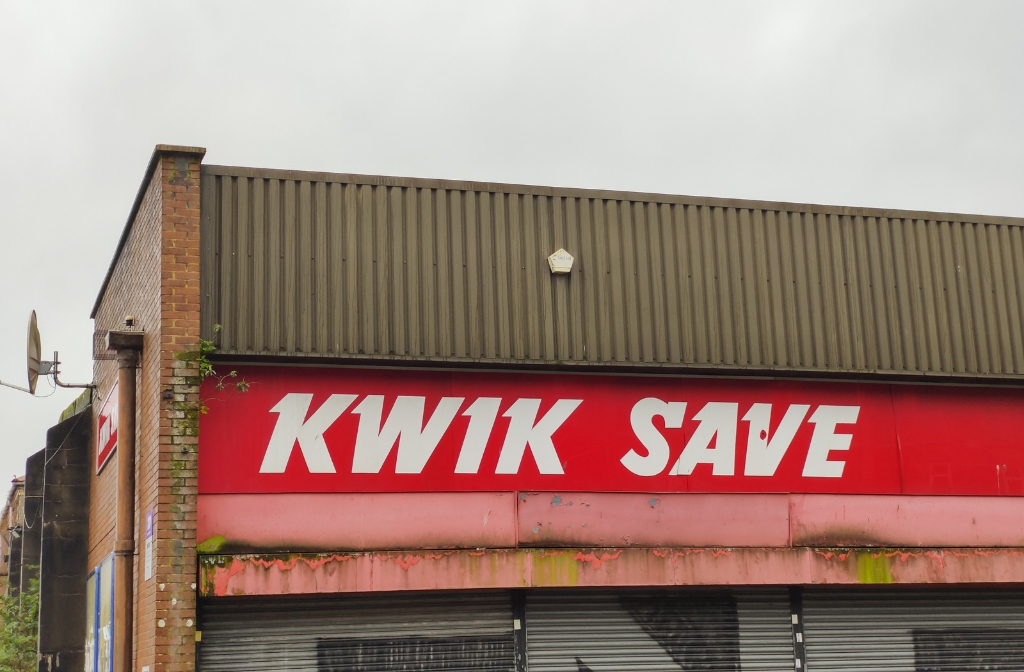
Kwik Save was arguably the UK’s most well-known budget supermarket brand in the 1980s, with its bold red shop front and white lettering popping up on just about every high street in its heyday.
Founded as a discount supermarket chain in 1959 by Welsh businessman Albert Gubay, with its headquarters in Prestatyn, it was originally known as Value Foods. The first stores opened in Prestatyn, Wrexham and Chester. During the 1960s, it had 13 branches and continued to grow.
In 1970, the company rebranded as Kwik Save and operated on a very simple format, with the basic no-frills design of the stores promoting low prices rather than luxury. For the average cash-strapped family in the 1970s, in an era of the miners’ strikes, power cuts and economic downturn, Kwik Save was a godsend.
Goods were stacked high on the shelves in cardboard packing boxes to reduce storage and warehouse space. There were between 400 and 600 product lines – a relatively low number compared with competitors.
There were no price tags on individual items to save money and Kwik Save didn’t have loss leaders, sales or special offers. Their ethos was keeping prices low all the time, right across the board. Shoppers didn’t care about how the stores looked; they were happy to buy their weekly shop cheaply.
Kwik Save continued to thrive going into the 1980s. However, in a decade which saw a shopping revolution, larger supermarkets sprang up across the UK, often at out-of-town retail parks. Smaller discount chains such as Kwik Save began to feel the pinch as a decade of relative consumer affluence began, following the hardships of the 1970s.
The likes of Tesco, Asda and Safeway had a contemporary feel including a large car park, a modern aluminium shop front, store loyalty cards and thousands of products.
Struggling Kwik Save merged with Somerfield in 1998, with its shelves of cheap goods in cardboard boxes unable to compete with the new industry leaders. A relaunch of the brand in April 2012 by new owner Costcutter saw Kwik Save promoted as a cheaper alternative to the bigger supermarkets.
According to its website, it now operates around 2,500 small convenience stores, largely on a franchise basis, across the UK under the trading names Kwik Save, Costcutter, Mace and Supershop.
Looking back at 1980s shops and reflecting on the former high-fliers that are no longer with us today, it goes to show retail business owners can’t afford to be complacent. However successful, they must evolve and continue to move with the times.
That said, the cheap and cheerful brands of yesteryear continue to evoke many happy memories for shoppers of a certain age!