
As a business owner, you have the responsibility to deal with any issues relating to your commercial property. Condensation is one of the most common challenges a business owner can face which could lead to some long-term issues if not dealt with quickly.
© aomas / shutterstock.com
What is condensation?
Condensation is a scientific process where water vapour in the air becomes a liquid. There are two ways it can do this – either the air cools and reaches the dew point, or there is so much precipitation in the air that it can’t hold any more water.
Typically, dew occurs because water vapour in the air reaches an unsustainable level. In commercial premises this is a common issue as customers can influence this by bringing in moisture from the outside and simply breathing.
The cold and wet weather can also influence condensation. If the air in the building cools down enough to reach the dew point, water droplets can build up on surfaces.
What are the consequences?
- Stock can become damaged, especially when the packaging is made of cardboard or products vulnerable to liquids
- Customers could be put off from entering the premises which could affect your business footfall. This could also lead to a bad reputation deterring other potential customers from entering
- Damp areas could start mould growth which can ruin interior design and cause a health concern for employees
The mould problem
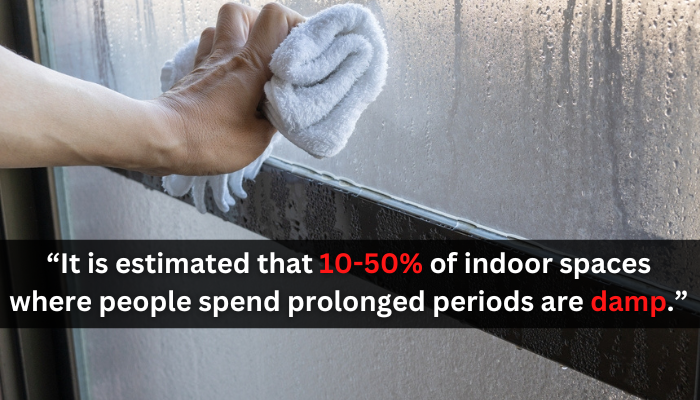
According to the World Health Organisation (WHO), “in Europe, it is estimated that 10-50% of indoor spaces where people spend prolonged periods are damp.”
Mould is the long-term consequence of condensation being allowed to linger in your building. Humid, damp conditions are what enable mildew to grow.
The issue with mould is that it can cause a range of health issues for workers and customers including skin irritants, allergic reactions, respiratory problems, and even toxic substances depending on the strain of fungus that grows.
A study conducted in 2012 found that “dampness, moisture and mould in the living environment have been associated with adverse respiratory health outcomes”.
How to stop condensation
There are various ways that you can prevent condensation from building up:
Ventilation
By improving ventilation within your building, a continuous supply of fresh air could reduce the build up of unwanted moisture. Additional vents installed on windows or special air bricks in the property will be a good start!
Dehumidifiers
The use of dehumidifiers placed inside the buildings will extract moisture from the air. As they are often on wheels, they can be situated within the rooms where they are required the most.
Insulation
A typical long-term solution for condensation is to focus on improving the insulation of the building. The correct type of insulation for the property can be expensive, but it would be a good investment if you live in an area frequently affected by condensation.
Glazing
Installing proper glazing for the windows and shop front of your property can help with condensation. Our toughened glass can help with condensation. It uses low-emissivity glass to trap heat inside and minimise heat outside.
Condensation can be a real challenge for any shop owner, but with a few simple changes, e.g. investing in new insulation and glazing, it’s possible to solve the problem once and for all.
If you’re interested in learning more, or if you would like to discuss all our products to find out which ones can help your shop, contact us today.